
-
About Us
Why Choose Us?
Ningbo Kosda New Material Technology Co., Ltd. was established in 2015 and is located in the Ningbo Binhai Economic Development Zone, China, which is the world's largest deep-water port in terms of throughput and a civilized city in China. It is a large modern production enterprise that integrates the design, research and development, production, and sales of paper products. The company adheres to the principle of quality development, advocates green and environmentally friendly products, and promotes the industrialization of high-tech. Starting from meeting customer needs, we provide high-quality and efficient services.
 Modern Green And Environmentally Friendly Paper Product Manufacturer
 -
Products

-
News




 English
 French
 Español
 German

Company News
Napkin OEM Pre-Shipment Quality Inspection Completed - Ningbo Kosda
Content
- 1 Ningbo Kosda Completes Pre-Shipment Quality Inspection for Multi-Pattern Napkin and Tabletop Paper Orders
- 2 Why Pre-Shipment Inspection Matters for OEM Napkin Orders
- 3 Inspection Process Applied on This Batch
- 4 Product Batches Covered in This Inspection Round
- 5 Batch Data Overview
- 6 Inspection Checkpoints Compared
- 7 Company Introduction
- 8 Industry Trend: Rising Demand for Custom Printed Tabletop Paper
- 9 Frequently Asked Questions
- 9.1 Q1: What does a pre-shipment napkin inspection actually check?
- 9.2 Q2: Why is print quality treated as a higher priority than other checks for printed napkins?
- 9.3 Q3: How are minor defects handled when they are found during inspection?
- 9.4 Q4: Can buyers request a stricter inspection standard for a specific pattern group?
Ningbo Kosda Completes Pre-Shipment Quality Inspection for Multi-Pattern Napkin and Tabletop Paper Orders
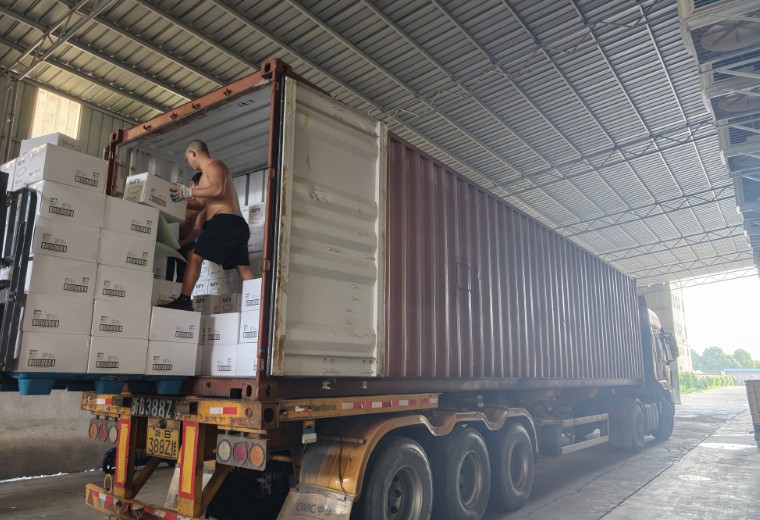
On June 12, 2026, Ningbo Kosda New Material Technology Co., Ltd. completed a scheduled pre-shipment quality inspection covering several export batches of printed disposable napkins and round tabletop paper coasters. The inspection confirmed that all sampled cartons met the agreed packaging count, print registration, and folding specifications before the goods were released for container loading. This napkin quality inspection is part of the standard OEM napkin manufacturer workflow that Kosda applies to every outbound order, regardless of destination market or order size. Buyers sourcing custom printed napkins from China increasingly ask suppliers to document this stage, since packaging integrity and print accuracy are the two most common causes of post-shipment disputes in the disposable tableware category. The sections below walk through why this checkpoint matters, how it was carried out, and what the batch-level data from this particular inspection looked like.
Why Pre-Shipment Inspection Matters for OEM Napkin Orders
Disposable napkins and printed paper coasters are low-unit-value items shipped in very high volumes, which means a small percentage defect rate can still translate into thousands of unusable pieces once a container reaches a buyer's warehouse. A pre-shipment inspection catching a folding or print misalignment issue before loading is far less costly than a customer discovering it after retail packaging has already been applied. For OEM napkin supplier relationships in particular, buyers are usually working with private-label artwork, so print registration and color consistency carry more weight than they would for a plain, unprinted product. The inspection also verifies that the physical carton count matches the packing list, which matters for customs clearance and retail shelf planning on the buyer's side. Wholesale disposable napkin quality control at this stage typically checks four things: ply count and paper weight, print clarity and color match, fold consistency, and outer carton/poly wrap integrity.
Inspection Process Applied on This Batch
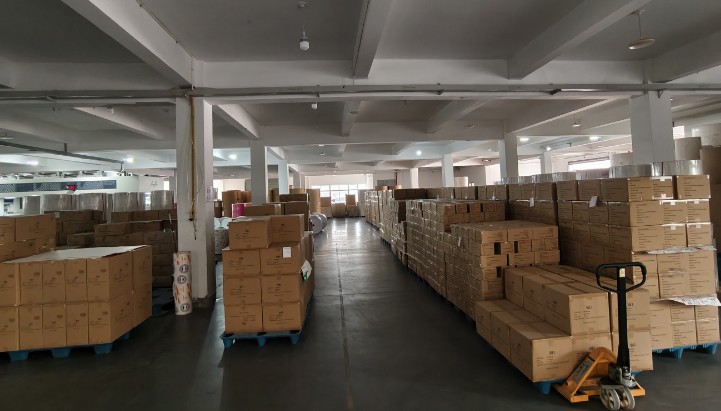
The inspection team laid out full pallet quantities on the factory floor for each pattern group, allowing every visible pack to be checked for wrapping seal integrity and label placement rather than relying only on a small random sample. Random sampling was then applied within each pattern group at a general inspection level consistent with common AQL 2.5 practice for printed paper goods, meaning a fixed sample size was pulled from each lot to represent the whole batch. 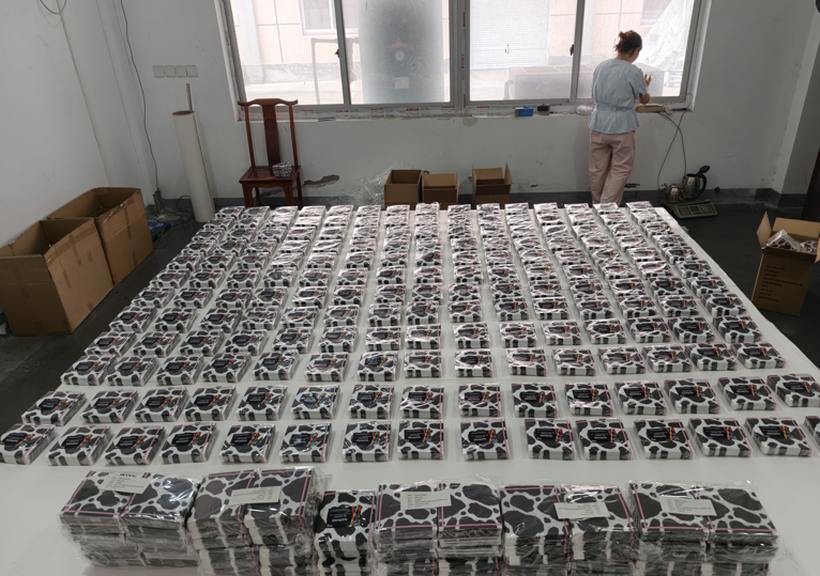 Sampled packs were checked against the reference sample approved during order confirmation, comparing print color, pattern placement, and pack dimensions side by side. Weight checks were also performed on a subset of packs to confirm ply count and paper density stayed within the tolerance range agreed with the buyer. Any pack showing a folding defect, ink smear, or seal gap was pulled aside and logged separately rather than repacked into the shipment batch.
Product Batches Covered in This Inspection Round
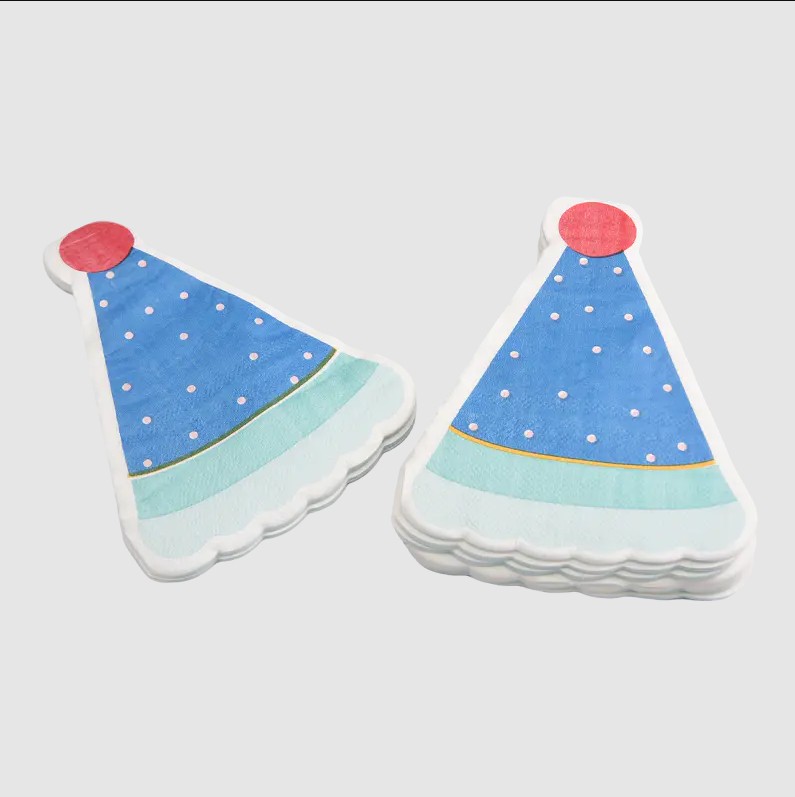
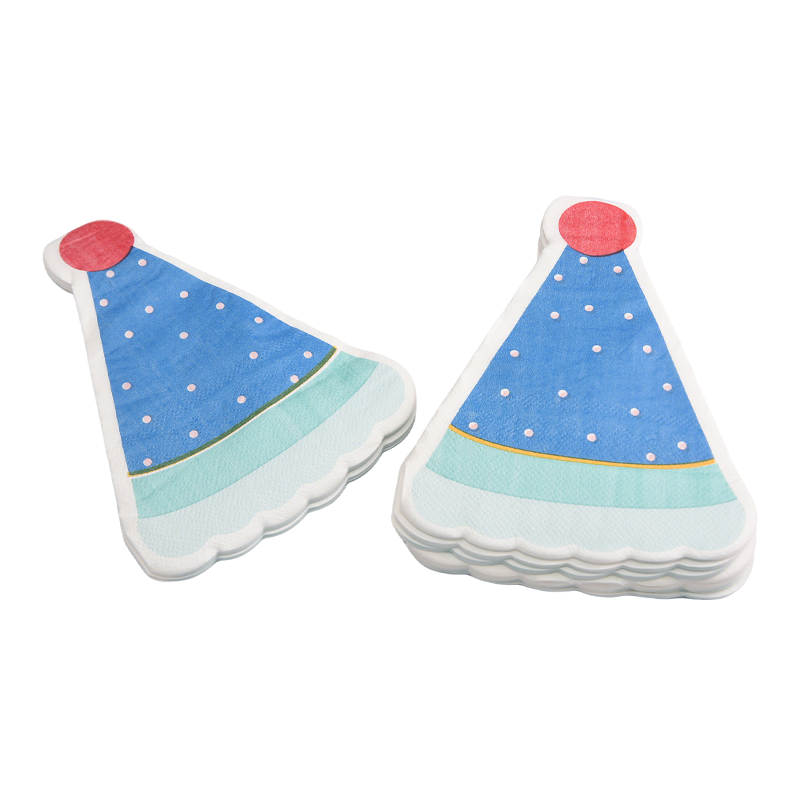
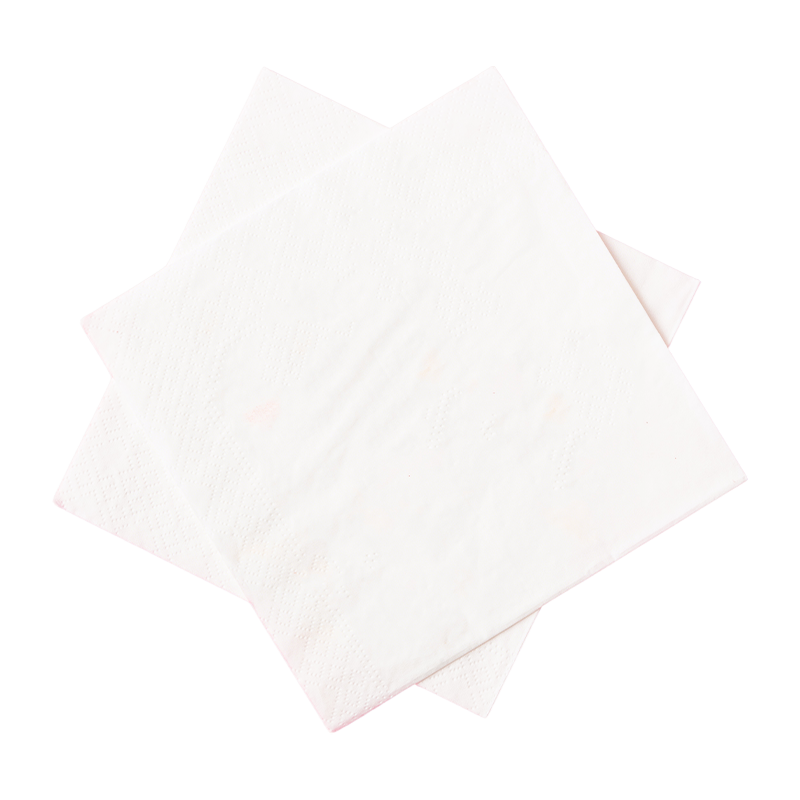
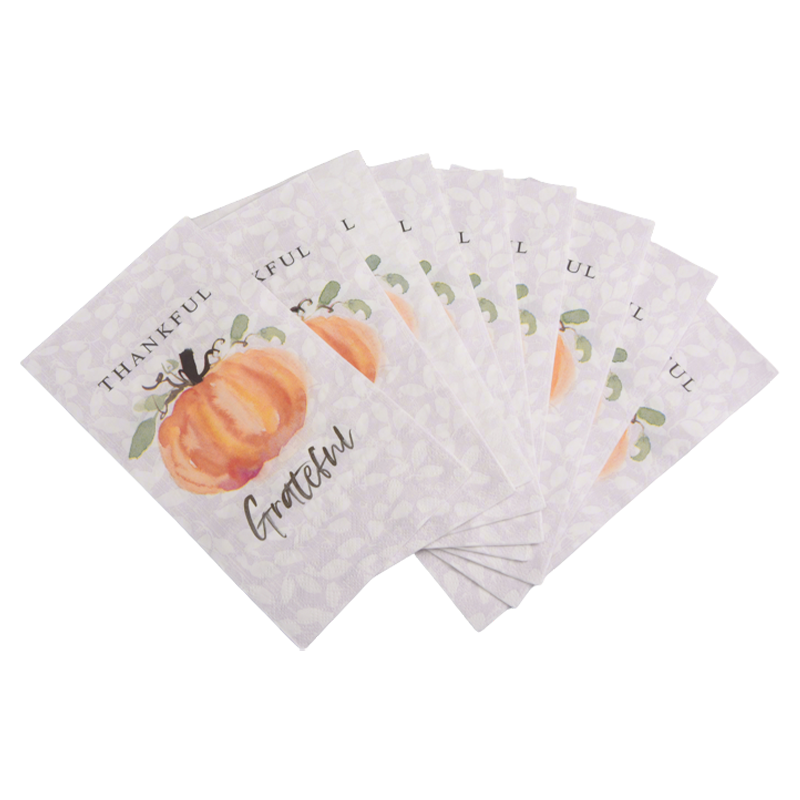
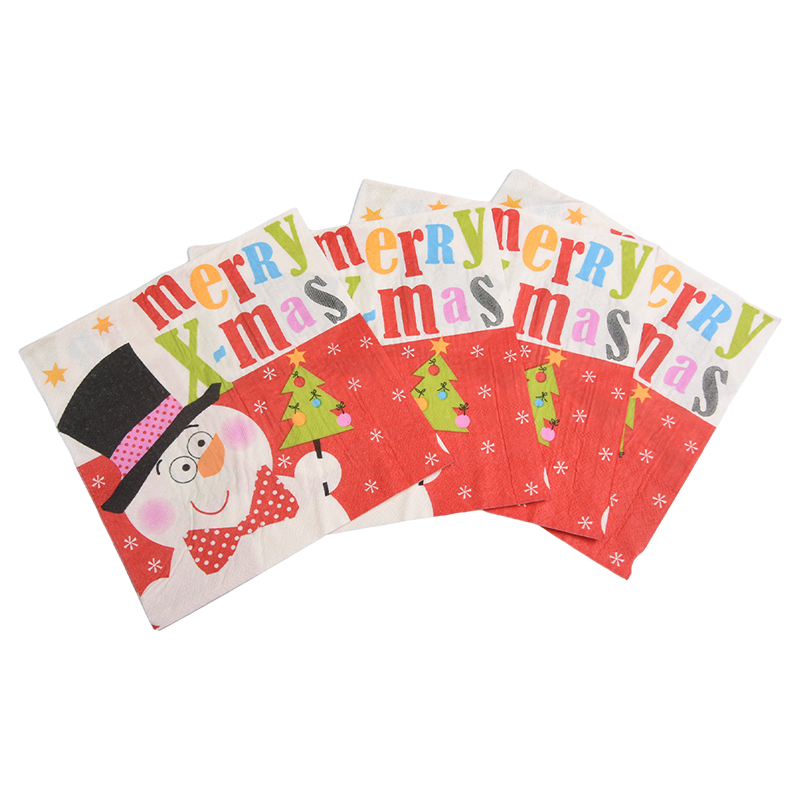
Four distinct SKU groups were part of this inspection cycle, spanning both printed napkin packs and a separate round paper coaster line. The floral and animal-print napkin groups are aimed at seasonal and gift-set retail programs, while the round coaster line is typically ordered for cafe and hospitality tabletop use.
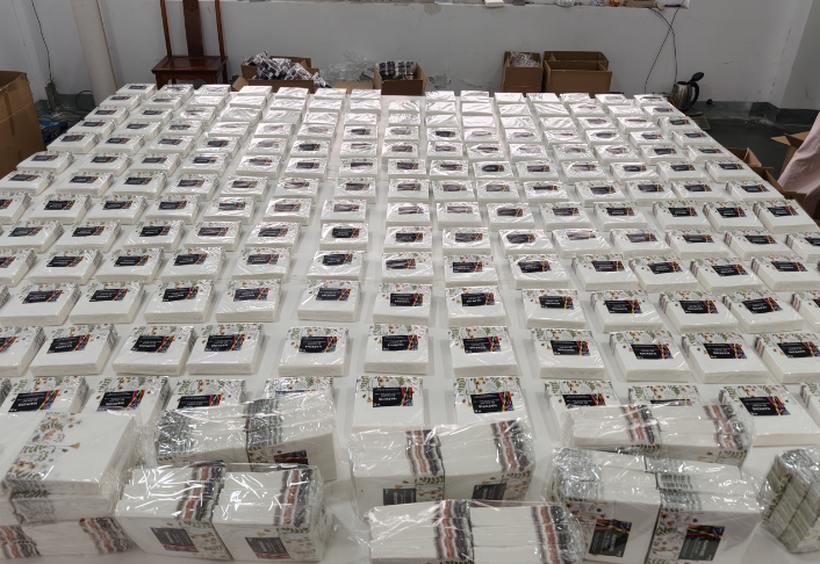
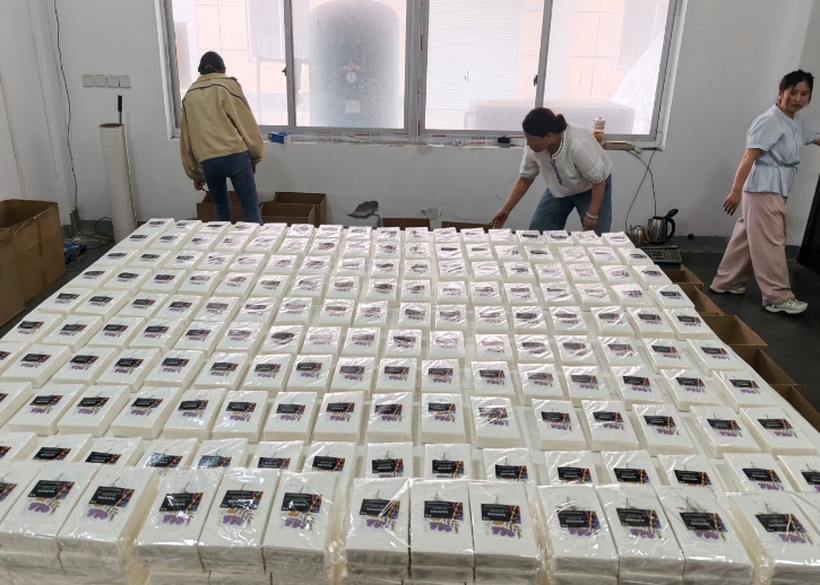
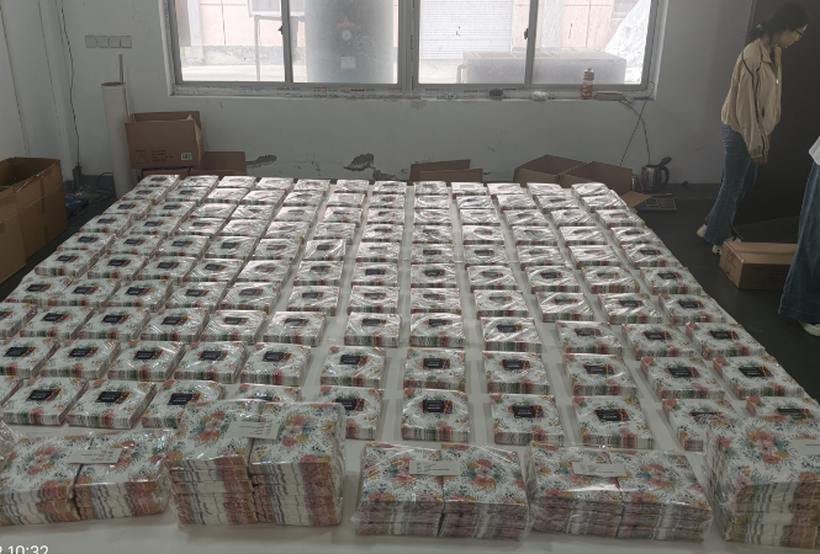
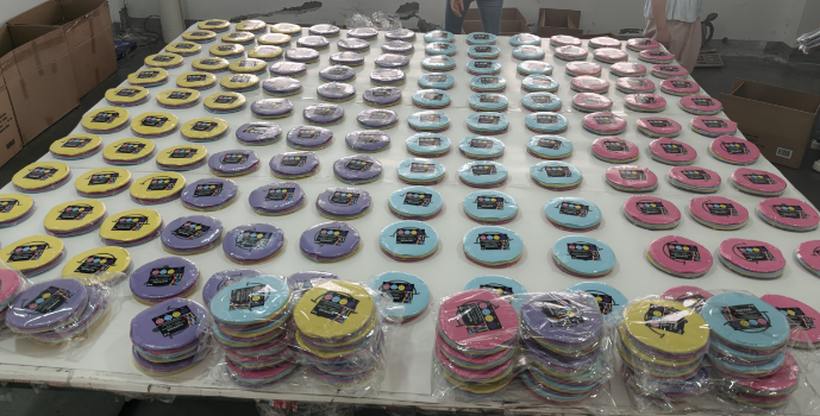
Grouping the layout by pattern before inspection made it easier to spot a misprint or off-shade pack, since any outlier stood out visually against dozens of correctly matched neighbors. This layout method is a practical habit for any custom printed napkins manufacturer working with several color variants in a single order, because it turns a visual defect check into something closer to a side-by-side comparison rather than a memory-dependent judgment call.
Batch Data Overview
The chart below summarizes the sampled pack counts across the four SKU groups included in this inspection round. Sample sizes were set higher for the two largest pattern groups, reflecting their larger overall order quantity within this shipment.
Across the full sample of 1,170 packs checked in this round, the inspection team logged a small number of minor defects, none of which were classified as critical under the buyer's agreed inspection criteria. Minor defects included light ink smudging on a handful of cow print packs and two cases of uneven fold thickness in the floral group, both within the tolerance range typically accepted for printed disposable napkins. No packaging seal failures or missing-label issues were found across any of the four groups. The donut chart below breaks down where the minor defects that were logged actually occurred, which helps explain why print-related checks receive more attention than dimensional checks in this product category.
Ink smudging accounts for the largest share of minor defects, which is consistent with what most printed napkin manufacturers report, since surface printing on tissue paper is more sensitive to press pressure and drying time than solid-color paper stock. Fold thickness variation is generally tied to how paper feeds through the folding line during longer production runs, and it tends to appear more often toward the middle of a print run rather than at the start or end. None of the categories shown here reached a level that would trigger a re-inspection or hold on shipment under standard wholesale disposable napkin quality control terms. Tracking defect categories this way, rather than only recording a single overall pass or fail result, gives the factory a clearer signal about which stage of production to adjust for the next run. Buyers reviewing inspection reports from an OEM napkin supplier can also use this breakdown to decide whether a tighter AQL level is worth requesting for future orders in a specific pattern group.
Inspection Checkpoints Compared
The table below lists the checkpoints applied during this inspection round alongside the general tolerance basis used for printed napkin and paper coaster products.
| Table 1: Inspection checkpoints applied to the June 12, 2026 napkin and coaster batch | ||
| Checkpoint | What Is Verified | Result This Batch |
| Print registration | Pattern alignment and color match versus approved sample | Within tolerance |
| Ply count and weight | Paper density and layer count against spec sheet | Within tolerance |
| Fold consistency | Uniform fold lines and pack thickness | Minor variance noted |
| Poly wrap and seal | Wrap integrity and heat-seal strength | No issues found |
| Carton count | Physical count against packing list | Matched packing list |
This checkpoint structure is fairly standard across the sustainable food packaging supplier segment, though the relative weight given to each row can shift depending on whether an order is printed or plain, single-color or multi-pattern. Orders with several pattern variants in one shipment, like the batch covered here, generally need more time allocated to print registration checks simply because there are more reference samples to compare against. Buyers who source frequently from the same OEM napkin manufacturer sometimes agree on a fixed checklist like this one in advance, which speeds up the inspection sign-off process on both sides.
Company Introduction
Ningbo Kosda New Material Technology Co., Ltd. is a China OEM/ODM catering packaging manufacturer and sustainable food packaging supplier established in 2015 and located in the Ningbo Binhai Economic Development Zone, home to one of the world's largest deep-water ports by throughput. The company is a large modern production enterprise that integrates design, research and development, production, and sales of paper products. Kosda's operating approach is built around quality-focused development and a preference for green, environmentally friendly materials, alongside continued investment in higher-technology production methods. Starting from a clear understanding of customer requirements, the company aims to provide efficient, dependable service across its napkin, tabletop paper, and related catering packaging product lines.
Industry Trend: Rising Demand for Custom Printed Tabletop Paper
Demand for printed and pattern-specific napkins has been growing alongside the broader trend of cafes, hotels, and event venues using tabletop paper as a low-cost branding and seasonal decor tool rather than a purely functional item. This shift pushes more of the inspection workload toward visual and print criteria rather than only basic paper quality, which is part of why pre-shipment checks like the one described above have become a more visible part of the OEM napkin supplier relationship. Round paper coasters, similar to the ones included in this inspection round, are also seeing steadier order volume from hospitality buyers looking for a coordinated tabletop set rather than napkins alone. For manufacturers, this trend generally means shorter, more frequent print runs across a wider range of patterns, which increases the value of a consistent, repeatable inspection checklist rather than a one-off quality check applied only to large single-pattern orders.
Frequently Asked Questions
Q1: What does a pre-shipment napkin inspection actually check?
It typically covers print registration and color match, ply count and paper weight, fold consistency, packaging seal integrity, and whether the physical carton count matches the packing list.
Q2: Why is print quality treated as a higher priority than other checks for printed napkins?
Printed napkins usually carry private-label or seasonal artwork, so a color or alignment mismatch is more likely to be noticed by end customers than a small dimensional variance, which is why it receives closer attention during inspection.
Q3: How are minor defects handled when they are found during inspection?
Packs showing a minor defect are set aside and logged separately rather than included in the shipment batch, and the defect category is recorded so the production line can be adjusted for future runs.
Q4: Can buyers request a stricter inspection standard for a specific pattern group?
Yes, buyers working with an OEM napkin manufacturer can generally agree on a tighter sampling level or additional checkpoints in advance for pattern groups where print consistency is a higher priority.
Your email address will not be published. Required fields are marked *

-
Modern Green And Environmentally Friendly Paper Product Manufacturer
-
Quick Links
Home About Us Products News Contact Us -
Product Categories
Paper Plates Paper Cup Paper Napkin Paper Food Container Wrapping Paper Roll Disposable Paper Tablecloth -
Contact Us
 Tel: +86-13967818265
 E-mail: [email protected]
E-mail: [email protected] Add: 1036 Cidong Avenue, Binhai Economic Development Zone, Ningbo City, Zhejiang Province, China
