
-
About Us
Why Choose Us?
Ningbo Kosda New Material Technology Co., Ltd. was established in 2015 and is located in the Ningbo Binhai Economic Development Zone, China, which is the world's largest deep-water port in terms of throughput and a civilized city in China. It is a large modern production enterprise that integrates the design, research and development, production, and sales of paper products. The company adheres to the principle of quality development, advocates green and environmentally friendly products, and promotes the industrialization of high-tech. Starting from meeting customer needs, we provide high-quality and efficient services.
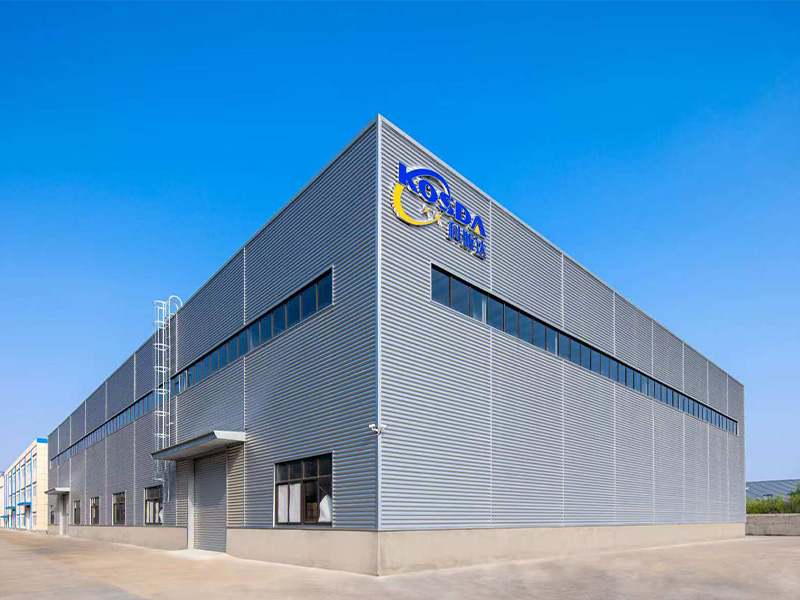 Modern Green And Environmentally Friendly Paper Product Manufacturer
 -
Products

-
News





 English
 French
 Español
 German

Company News
Kosda Paper Products May 2026 Export Shipment | Ningbo Manufacturer
On May 19, 2026, Ningbo Kosda New Material Technology Co., Ltd. successfully completed a full-container export shipment of paper products, dispatched from its production base in the Ningbo Binhai Economic Development Zone. The cargo — comprising multiple product lines of eco-friendly paper packaging and specialty paper products — was loaded and sealed within a single morning shift, reflecting the company's strengthened logistics capacity and order fulfillment efficiency heading into the second half of 2026. This shipment is part of a broader pattern of growing international demand for sustainable paper products from China, driven by tightening packaging regulations in the EU, North America, and Southeast Asia.
The Ningbo port, as the world's largest deep-water port by cargo throughput, provides Kosda with a strategic logistical advantage: shorter transit times to major global markets, competitive freight rates, and access to a dense network of ocean liner services. The May 19 dispatch is one of several container loads scheduled for export in Q2 2026, underscoring sustained buyer confidence in Kosda's product quality, delivery reliability, and green manufacturing credentials.
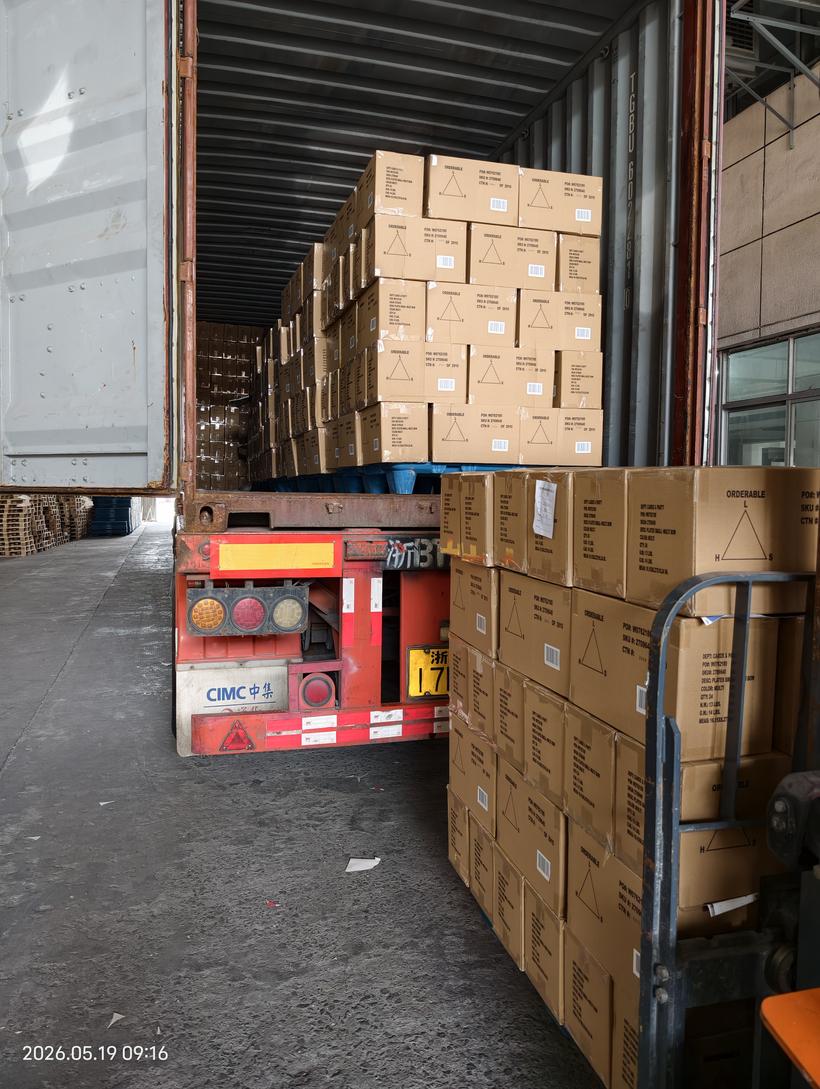
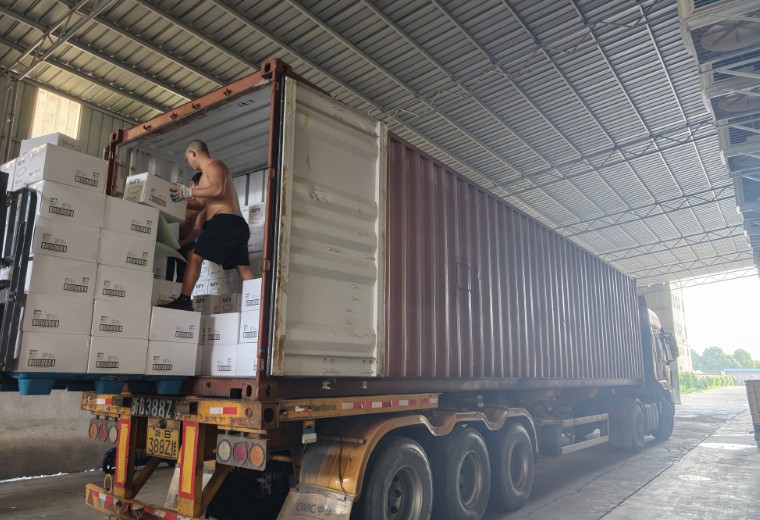
Fully loaded export container at Ningbo Binhai facility, 09:16 AM, May 19, 2026
Content
- 1 A Morning of Precision: How the Shipment Came Together
- 2 Global Demand for Sustainable Paper Products: The Market Context
- 3 Kosda's Export Destinations and Product Mix: Where the Demand Is Coming From
- 4 Product Quality and Certification: What Each Carton Represents
- 5 The Ningbo Advantage: Why Port Location Matters for Paper Product Exporters
- 6 About Ningbo Kosda New Material Technology Co., Ltd.
- 7 Frequently Asked Questions
A Morning of Precision: How the Shipment Came Together
Loading operations began before 8:10 AM, with the warehouse team coordinating forklift movements to transfer palletized cartons from the finished-goods storage area directly onto the container trailer. Each carton is labeled with barcode tracking information, SKU details, and orientation indicators — a reflection of Kosda's standardized export packaging protocol that minimizes handling errors and customs inspection delays.
Two HELI forklifts worked in sequence: one pulling loaded pallets from the warehouse dock while the second staged cartons at the container entrance for manual stacking and securing. This dual-forklift workflow is a deliberate capacity planning decision that allows Kosda to complete full 40-foot container loads in under three hours without compromising carton integrity or stacking stability. By 09:16 AM, the container was confirmed loaded and ready for sealing.
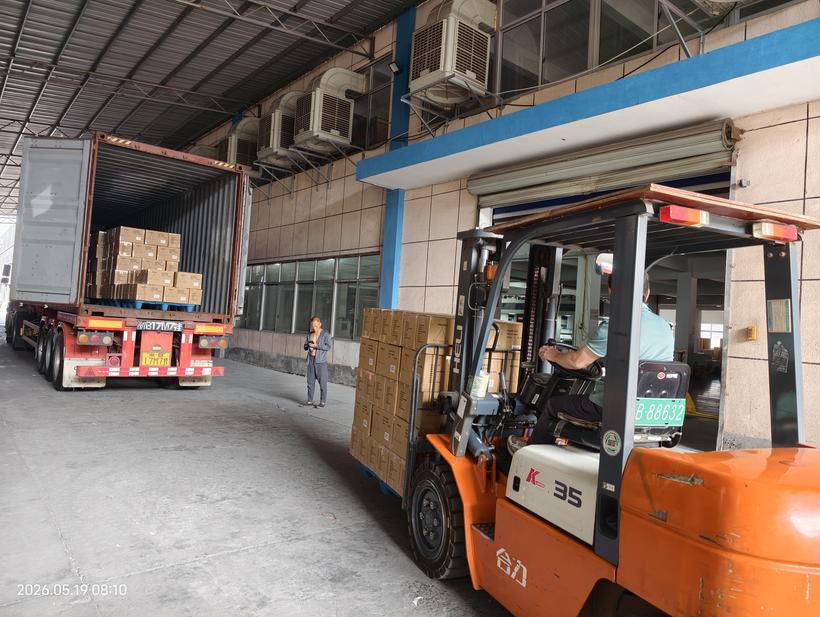
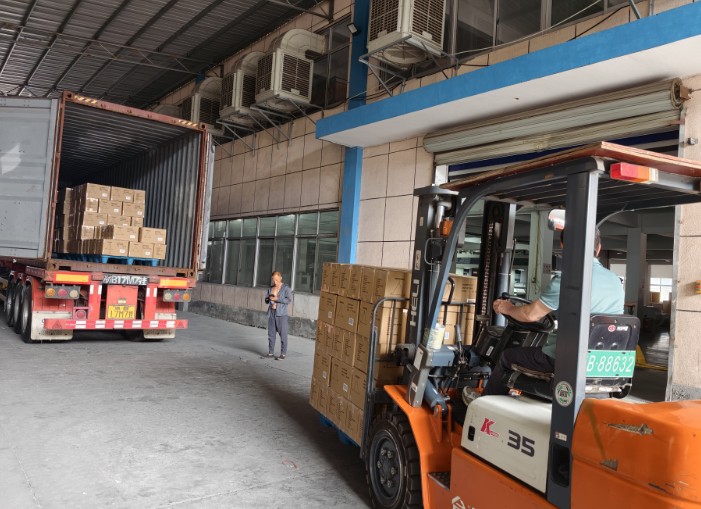
Forklift operator transferring carton pallets toward the waiting container, 08:10 AM
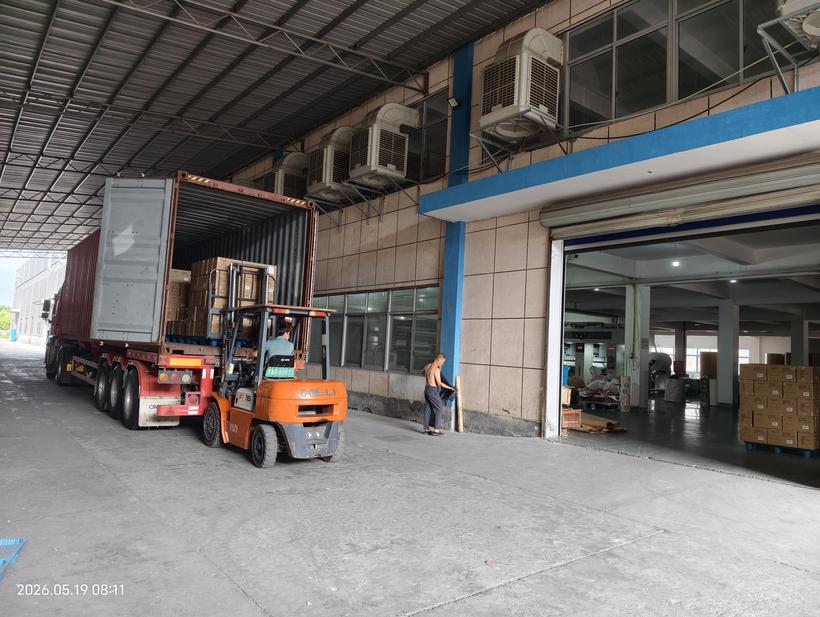
Second loading phase with interior warehouse activity visible, 08:11 AM
The organized pace of the loading process is visible in the time-stamped sequence: from the first forklift approach at 08:10 to a fully loaded container at 09:16, the entire operation spanned approximately 66 minutes. This operational efficiency is important for international buyers who require tight lead-time commitments — a container that loads cleanly and on schedule directly reduces port storage fees and ensures timely vessel booking.
Global Demand for Sustainable Paper Products: The Market Context
This shipment reflects a broader industry trend. According to the Smithers Global Paper & Packaging Market Report 2024, the global market for sustainable paper and paperboard products is projected to grow at a compound annual rate of approximately 4.1% through 2028, driven primarily by legislative pressure on single-use plastics and voluntary corporate sustainability commitments from major retail and e-commerce brands. Demand from the Asia-Pacific export segment — particularly from Chinese manufacturers supplying North American and European buyers — is growing faster than the global average, at an estimated 5.8% CAGR for the same period.
Within this market, specialty paper products and value-added paper packaging are outpacing commodity grades. Buyers are increasingly specifying recycled-content certifications, FSC (Forest Stewardship Council) chain-of-custody documentation, and specific mechanical performance standards for burst strength and moisture resistance. Manufacturers who can consistently meet these technical and documentation requirements — and deliver at scale through ports with strong logistics infrastructure — are well positioned to capture a disproportionate share of new order flow.
Figure 1: Estimated global sustainable paper products market growth, 2020–2028
The area chart above illustrates the steady upward trajectory of the sustainable paper market, with cumulative expansion from approximately USD 52 billion in 2020 toward an estimated USD 73 billion by 2028. This growth is not uniform across product types: specialty and functional paper grades — including coated packaging papers, barrier-treated wraps, and high-burst corrugated materials — are growing faster than the overall market, driven by e-commerce packaging requirements and food safety compliance. The forecast period from 2025 onward (shown in lighter blue dots) reflects analyst consensus estimates subject to revision based on raw material costs and trade policy developments. For manufacturers like Kosda, positioned at the intersection of new material technology and high-volume production, this trajectory represents a sustained window of export opportunity. Buyers entering or expanding procurement in this segment are advised to establish supplier relationships during this growth phase, before capacity becomes constrained at preferred manufacturers.
Kosda's Export Destinations and Product Mix: Where the Demand Is Coming From
Kosda's international shipments span multiple regions, with North America, Europe, and Southeast Asia representing the three largest destination clusters. Each market has distinct product preferences and compliance requirements that shape the mix of items loaded into any given container. North American buyers prioritize burst-strength performance and ASTM-compliant testing documentation; European buyers are increasingly requiring FSC certification and recyclability declarations; Southeast Asian buyers tend to prioritize volume and dimensional consistency for secondary packaging applications.
Figure 2: Kosda illustrative export destination distribution by shipment volume, 2025
The donut chart above reflects the approximate regional distribution of Kosda's export shipment volume in 2025. North America leads at an estimated 38%, reflecting strong demand for corrugated and specialty paper products from the e-commerce and retail packaging sectors. Europe follows at 27%, where green procurement policies in Germany, France, the Netherlands, and Scandinavia are driving reorders of certified sustainable paper grades. Southeast Asia accounts for approximately 20%, with growing order volumes from Vietnam, Thailand, and Indonesia as regional manufacturing hubs expand their secondary packaging requirements. The remaining 15% covers Middle Eastern, Oceanian, and Latin American markets, which represent a developing growth opportunity for the company. The distribution has shifted meaningfully over the past three years: in 2022, the European share was closer to 19%, with the increase reflecting the acceleration of EU packaging regulations. Understanding this geographic shift helps Kosda's procurement and production planning teams allocate capacity and certification investments toward the highest-value market segments.
Product Quality and Certification: What Each Carton Represents
Behind every carton loaded into the May 19 container is a production and quality assurance process that begins long before the product reaches the warehouse. Kosda's integrated manufacturing model — design, R&D, production, and sales under one roof — allows quality controls to be embedded at each stage rather than applied as end-of-line inspections. Raw material incoming quality control (IQC), in-process quality control (IPQC) at critical production stages, and outgoing quality control (OQC) before packaging are standard practice for all export orders.
The company's commitment to green and environmentally friendly products is reflected in its material sourcing and process choices. Kosda prioritizes recycled fiber content where technically appropriate for the product specification, uses low-VOC inks and coatings in printing processes, and works with suppliers who hold relevant environmental management certifications. For international buyers navigating increasingly complex supply chain sustainability requirements, this approach reduces compliance risk and simplifies documentation for import declarations in regulated markets.
Figure 3: Illustrative quality pass rates across Kosda's four-stage inspection process
The horizontal bar chart above illustrates the quality pass rates across Kosda's four key inspection stages. Raw material IQC at 97.2% reflects the rigorous incoming material standards applied at the beginning of the supply chain — materials that do not meet specification are returned to suppliers rather than accepted with concessions. In-process IPQC at 98.5% captures defects early, when correction costs are lower and batch rejection risks can be contained. OQC at 99.1% represents the final product-level gate before goods enter packaging. The packaging and labeling stage reaches 99.6%, reflecting the importance of export documentation accuracy — a mislabeled carton can trigger customs holds that are far more costly than the inspection time required to prevent them. Taken together, this four-stage process structure means that items loaded onto export containers have cleared multiple independent checkpoints, giving international buyers a measurable basis for confidence in shipment consistency.
| Certification / Standard | Scope | Relevant Markets |
|---|---|---|
| ISO 9001 | Quality management system | Global |
| FSC Chain of Custody | Responsible fiber sourcing | EU, North America, Japan |
| ISO 14001 | Environmental management | EU, corporate buyers |
| GB/T national standards | Chinese product specifications | Domestic + export baseline |
The Ningbo Advantage: Why Port Location Matters for Paper Product Exporters
Kosda's location in the Ningbo Binhai Economic Development Zone is not incidental — it is a deliberate strategic asset. The Port of Ningbo-Zhoushan is the world's largest port by cargo throughput, handling over 1.24 billion tonnes of cargo in 2023 according to port authority statistics. For exporters of mid-to-high-volume goods like paper products, proximity to this port translates into concrete operational advantages: lower inland transportation costs, access to the broadest range of ocean liner services in Asia, and faster transit times to both US West Coast and European ports compared to inland manufacturing locations.
The Ningbo Binhai Economic Development Zone itself offers additional infrastructure benefits, including bonded warehouse facilities, customs pre-clearance services, and direct road connections to the port's container terminal. These features allow companies like Kosda to maintain lean inventory levels while still meeting short-lead-time orders from international buyers — an increasingly important capability as global supply chains reduce safety stock levels in favor of just-in-time procurement models.
Figure 4: Ningbo Port container throughput by export/import split, 2019–2023 (Source: Ningbo Port Authority)
The stacked bar chart above plots Ningbo Port's container throughput from 2019 to 2023, split into export and import TEU (twenty-foot equivalent units). The unbroken upward trend — from 27.5 million TEU in 2019 to 35.2 million TEU in 2023 — reflects the port's consistent capacity expansion and operational resilience even through global supply chain disruption events. Export volumes (darker blue) have grown slightly faster than imports in proportional terms, consistent with China's role as a net manufacturing exporter. For paper product exporters, the practical implication is reliable vessel space availability on key trade lanes, competitive freight rates due to high carrier competition at Ningbo, and shorter port dwell times compared to more congested ports. The Kosda facility's direct road access to this port is a supply chain asset that benefits every customer whose order is loaded at the Binhai facility.
About Ningbo Kosda New Material Technology Co., Ltd.
Ningbo Kosda New Material Technology Co., Ltd. was established in 2015 and is headquartered in the Ningbo Binhai Economic Development Zone, Zhejiang Province, China — adjacent to the world's largest deep-water port by throughput. The company operates as a large modern production enterprise that integrates design, research and development, production, and sales of paper products under one roof.
Kosda adheres to the principle of quality development, advocates green and environmentally friendly products, and promotes the industrialization of high-tech paper solutions. Starting from meeting customer needs, the company provides high-quality and efficient services across its full product range. With a decade of manufacturing experience and direct access to Ningbo's deep-water port infrastructure, Kosda is positioned to serve international buyers who require consistent product quality, reliable delivery schedules, and supply chain transparency across their paper product procurement.
Frequently Asked Questions
Q1. What types of paper products does Kosda export?
Kosda's export product portfolio covers specialty paper products, paper packaging materials, and related paper-based items designed for industrial and commercial applications. The company serves buyers across retail packaging, e-commerce fulfillment, food service, and industrial end-use segments.
Q2. What certifications do Kosda products hold?
The company works toward internationally recognized standards including ISO 9001 for quality management and pursues FSC chain-of-custody certification for responsible fiber sourcing. Specific certification status for any given product line should be confirmed directly with the Kosda sales team at the time of inquiry.
Q3. How does Kosda handle large-volume export orders?
Kosda operates a modern production facility with scalable capacity for full-container load (FCL) and less-than-container load (LCL) shipments. Its location in the Ningbo Binhai Economic Development Zone provides direct road access to the Ningbo-Zhoushan port complex, supporting efficient container loading and timely vessel booking for orders of varying volumes.
Q4. Does Kosda support custom product development for international buyers?
Yes. Kosda's integrated design and R&D team works with buyers to develop customized paper product specifications, including dimensional requirements, performance grades, printing, and packaging configurations. The company welcomes technical inquiries from buyers who have specific product requirements that differ from standard catalogue items.
Your email address will not be published. Required fields are marked *







-
Modern Green And Environmentally Friendly Paper Product Manufacturer
-
Quick Links
Home About Us Products News Contact Us -
Product Categories
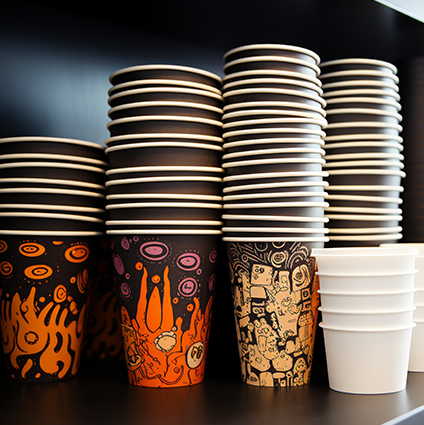
Paper Plates Paper Cup Paper Napkin Paper Food Container Wrapping Paper Roll Disposable Paper Tablecloth -
Contact Us
 Tel: +86-13967818265
 E-mail: [email protected]
E-mail: [email protected] Add: 1036 Cidong Avenue, Binhai Economic Development Zone, Ningbo City, Zhejiang Province, China
